
Wireless Emergency Stop Systems
Stop Anything. Anytime. Anywhere. Enhance safety with wireless e-stop and machine stop systems.
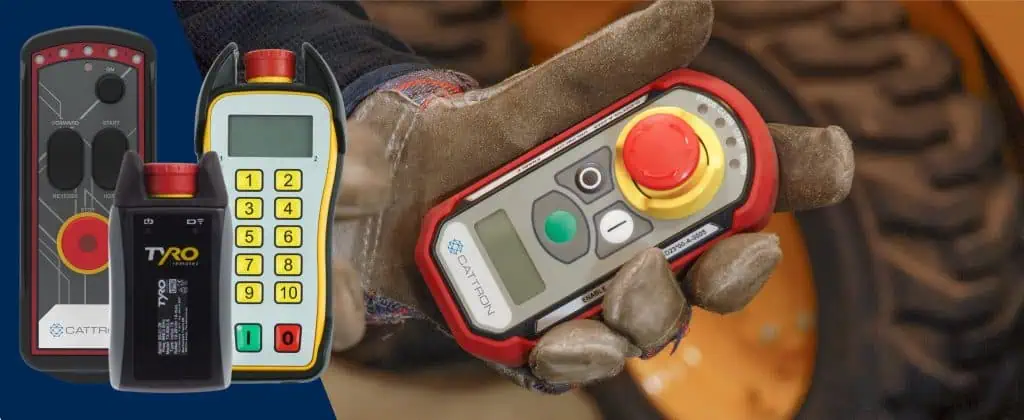
Remote Emergency Stop Solutions
Wireless emergency stop systems enable operators to safely stop machinery from a distance, improving response time and reducing risk in dynamic industrial environments. Also known as wireless e-stop systems or remote emergency stop systems, these solutions work with hardwired emergency stop buttons to provide greater flexibility, enhanced visibility and improved safety. Wireless e-stops are a valuable safety tool that works alongside existing hard-wired e-stops and other industrial remote control systems already in use.
What is a Wireless E-Stop System?
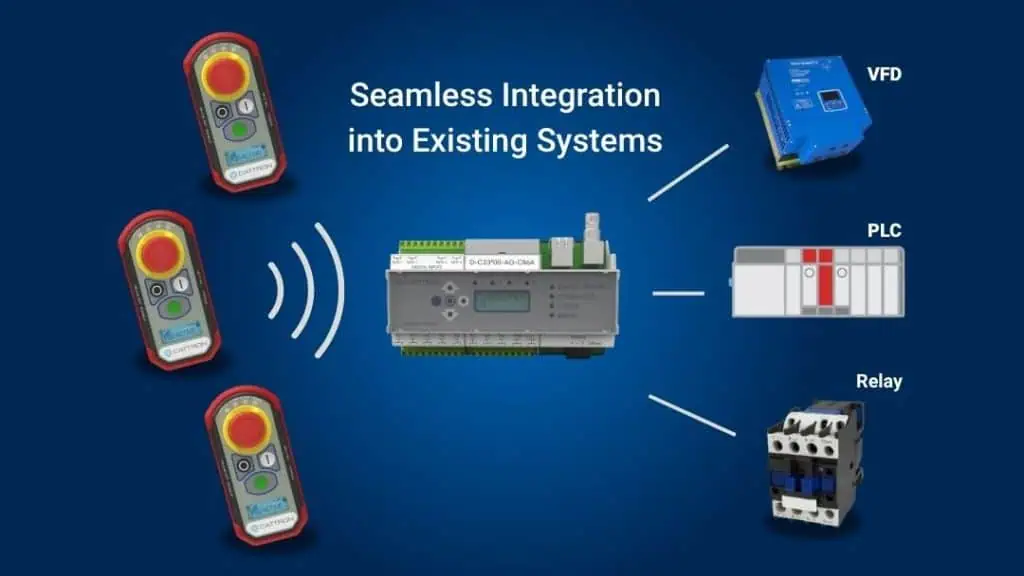
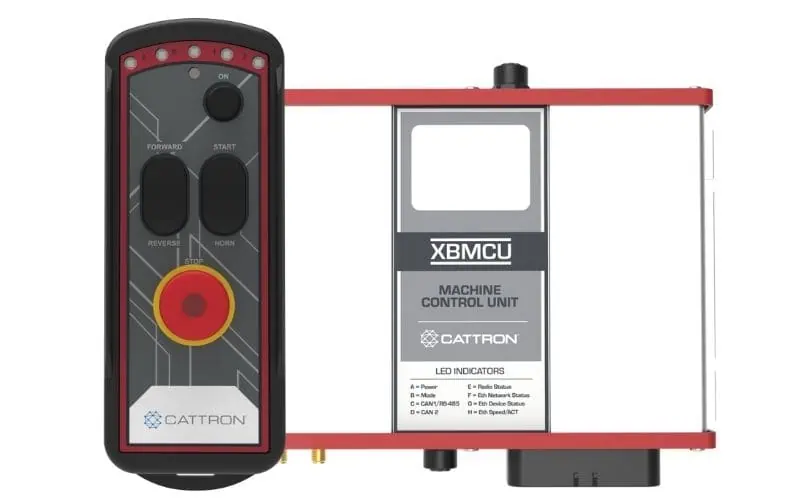
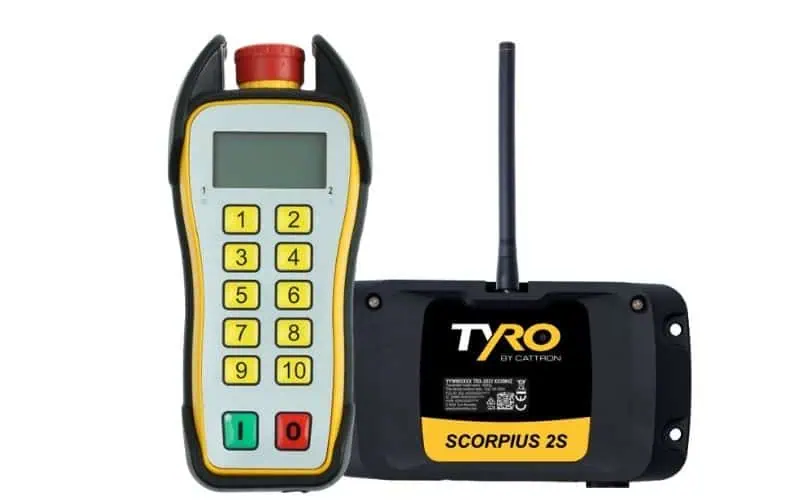
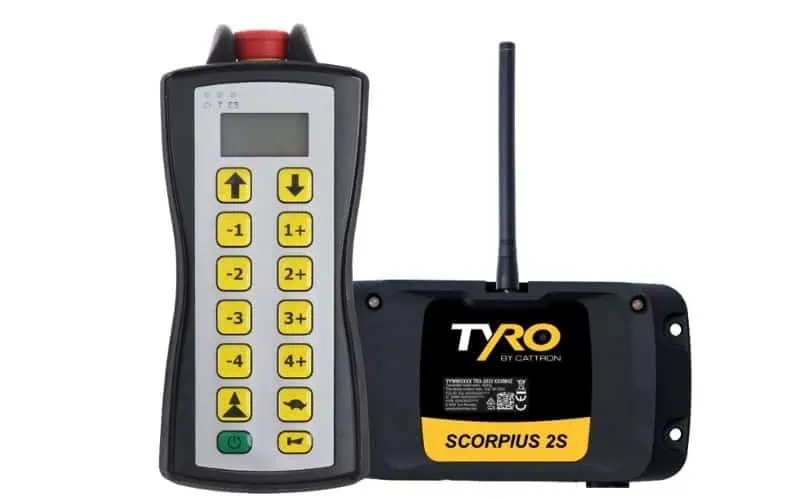
A wireless emergency stop system is a safety solution that allows an operator to immediately stop machinery using a handheld remote device (transmitter) rather than a fixed, wired e-stop button. These systems communicate with a machine control unit (receiver) using secure wireless protocols, ensuring that stop commands are transmitted instantly and reliably. When activated, the system immediately interrupts machine operation, bringing equipment to a safe stop.
Industrial Applications for Wireless E-Stops
Wireless e-stop system applications are commonly used in environments where operators need mobility, equipment spans large areas, or access to a fixed emergency stop is limited or unsafe.
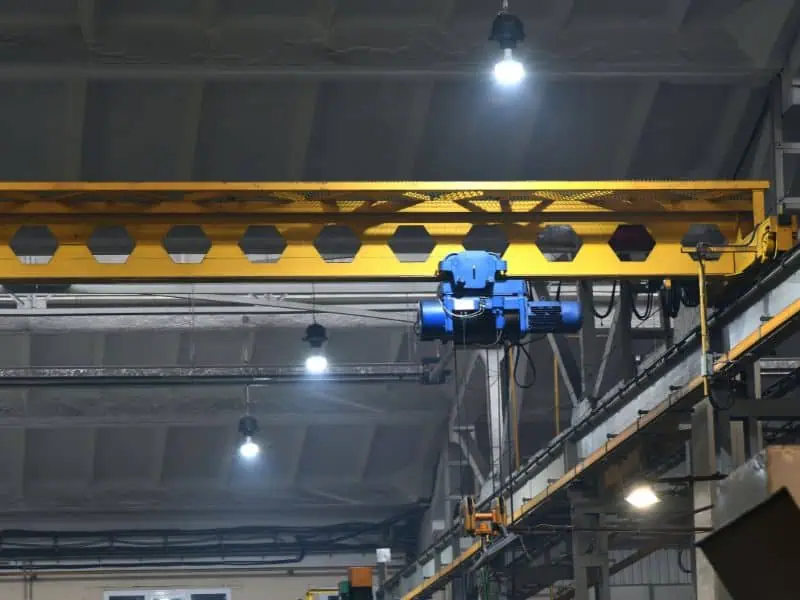
Cranes and Hoists
Allow operators to maintain full visibility of loads while retaining immediate stopping capability.

Conveying Systems
Provide rapid shutdown of conveyors to prevent accidents, material loss and protect personnel.
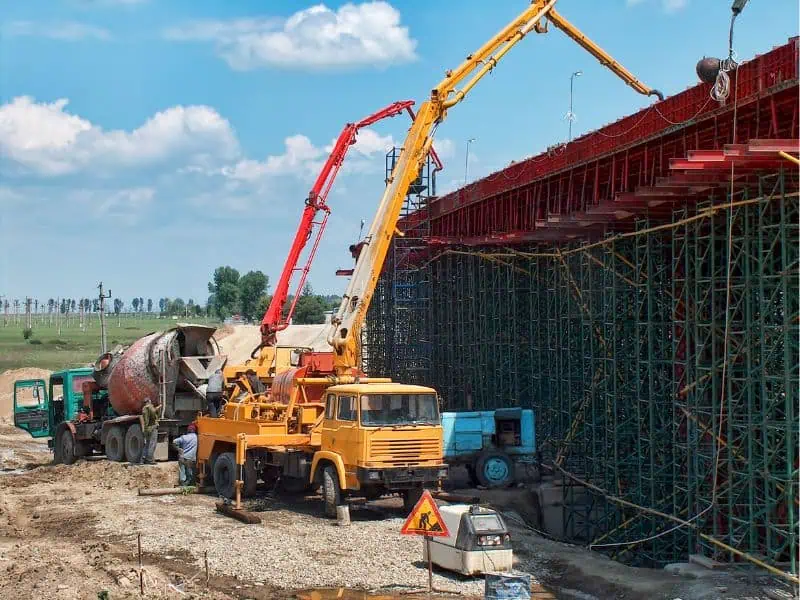
Mobile Equipment
Enable safe operation of machinery in construction, mining and industrial environments.

Industrial Automation
Support safety in automated systems where quick response and remote operation are critical.
System Requirements and Safety Considerations
Wireless emergency stop systems must meet strict safety and performance requirements to ensure reliable operation in critical environments. Selecting a properly certified wireless emergency stop system is essential for maintaining operator safety and meeting regulatory requirements.

Performance Level (PL) or SIL Ratings
Systems are designed to meet defined safety integrity levels such as PL-d or SIL3
ISO 13850 Compliance
Ensures emergency stop functionality meets global safety requirements
Secure Communication Protocols
Prevent signal interference and ensure command reliability
System Redundancy and Fault Tolerance
Helps ensure consistent performance even in demanding conditions
Cattron Wireless Emergency Stop Solutions
Cattron combines decades of industrial remote control expertise with advanced safety engineering to deliver dependable wireless emergency stop solutions.

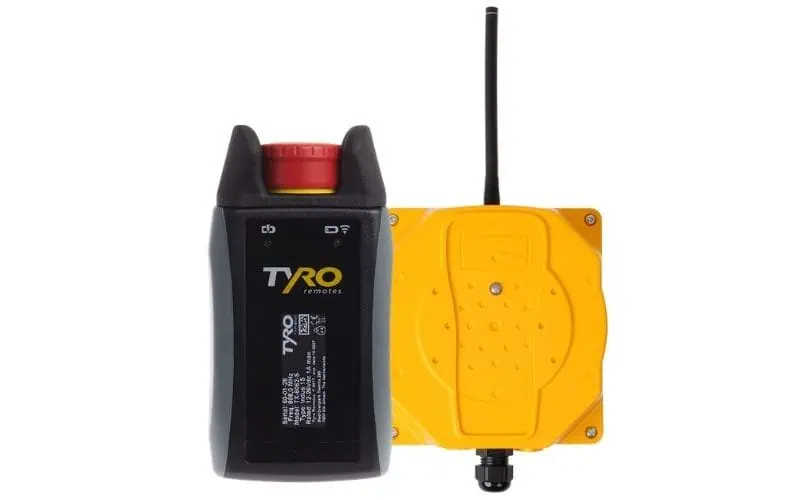

Specialty Controls


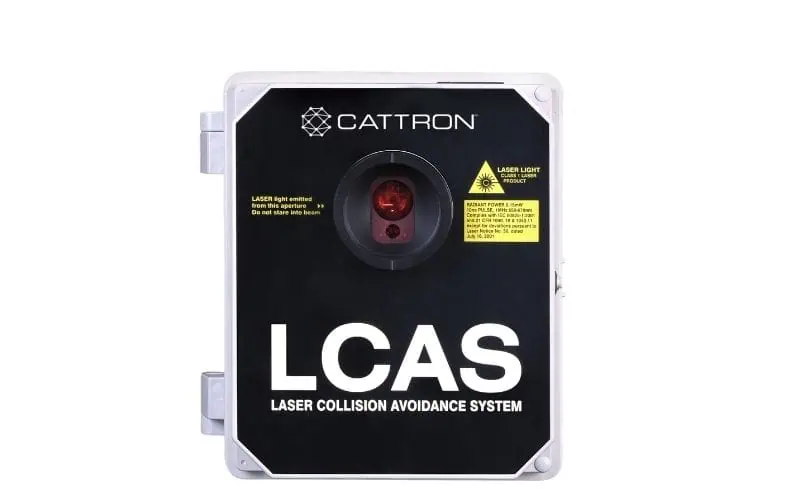
Frequently Asked Questions
-
How does a wireless emergency stop system work?
A wireless emergency stop system consists of a handheld transmitter (operator control unit) and a receiver (machine control unit) connected to the equipment. When the operator activates the emergency stop, a signal is transmitted wirelessly to the receiver, which immediately initiates a stop command.
Safety-rated wireless e-stop systems are designed so that this stop function has priority over all other control commands. The system continuously monitors communication between the transmitter and receiver to ensure reliable operation, and any fault condition, such as signal loss, brings the machine to a safe state.
-
How do wireless emergency stop systems comply with ISO 13850?
ISO 13850 defines the functional requirements for emergency stop systems, including immediate response, priority over all other functions and manual reset after activation. Wireless emergency stop systems are engineered to meet these requirements through robust system design and safety-rated architecture.
To comply, wireless systems must ensure that stop commands are transmitted reliably and executed without delay. They must also be designed so that loss of communication or system faults automatically result in a safe condition. Compliance with ISO 13850 is typically achieved in conjunction with functional safety standards such as ISO 13849 or IEC 62061.
-
What is the difference between PL-d and SIL in emergency stop systems?
PL (Performance Level) and SIL (Safety Integrity Level) are two distinct frameworks for defining the reliability of safety functions.
- PL (Performance Level) is defined in ISO 13849 and is commonly used in machinery safety. PL-d indicates a high level of reliability for safety-related control systems.
- SIL (Safety Integrity Level) is defined in IEC 62061 and IEC 61508 and is often used in process and complex systems.
Both frameworks measure the probability of failure of a safety function, but they use different methodologies and calculation approaches. In practice, both PL-d and SIL-rated systems are designed to ensure that emergency stop functions perform reliably under defined conditions.
To comply, wireless systems must ensure that stop commands are transmitted reliably and executed without delay. They must also be designed so that loss of communication or system faults automatically result in a safe condition. Compliance with ISO 13850 is typically achieved in conjunction with functional safety standards such as ISO 13849 or IEC 62061.
-
What happens if communication is lost in a wireless e-stop system?
In a safety-rated wireless emergency stop system, loss of communication between the transmitter and receiver is treated as a fault condition. The system is designed to automatically transition to a safe state, stopping the machine.
This behavior is essential for compliance with safety standards and ensures the system remains safe without relying on continuous communication. Advanced systems continuously monitor signal integrity, and any interruption, degradation or invalid communication triggers a stop response. nds are transmitted reliably and executed without delay. They must also be designed so that loss of communication or system faults automatically result in a safe condition. Compliance with ISO 13850 is typically achieved in conjunction with functional safety standards such as ISO 13849 or IEC 62061.
-
Can wireless emergency stop systems be integrated with PLCs?
Yes, wireless emergency stop systems can be integrated with PLC-based control systems, including safety PLCs. The receiver interfaces with the machine’s control architecture through safety-rated outputs or communication protocols such as CANopen Safety or other industrial networks.
Integration depends on the system design and application requirements. In many cases, the wireless receiver is connected directly to the machine’s safety circuit or safety controller, ensuring that emergency stop commands are processed in accordance with the overall safety system design.