
Wi-Fi Telemetry for Remote Equipment Operators
Introducing the Messenger Gateway
For operators running engines, generators and pumps in the field, the hardest sites to manage have always been the ones furthest from a cell tower. A water pump on a remote drilling pad, a generator at a pipeline compressor station or a transfer pump along a rural water line may sit miles beyond reliable cellular coverage. Historically, that meant one thing: if you wanted to know how the equipment was running, someone had to drive out and take a look.
Cattron’s expanding Messenger telemetry portfolio has steadily chipped away at that problem, and the newest addition closes one of the last remaining gaps. Messenger Gateway brings Wi-Fi and Ethernet connectivity to Cattron’s cloud-based remote monitoring lineup, allowing operators to move equipment data to the cloud over whatever internet connection is already on site, including satellite broadband networks increasingly common at remote industrial locations.
Wi-Fi and Ethernet Connectivity for Remote Equipment Monitoring
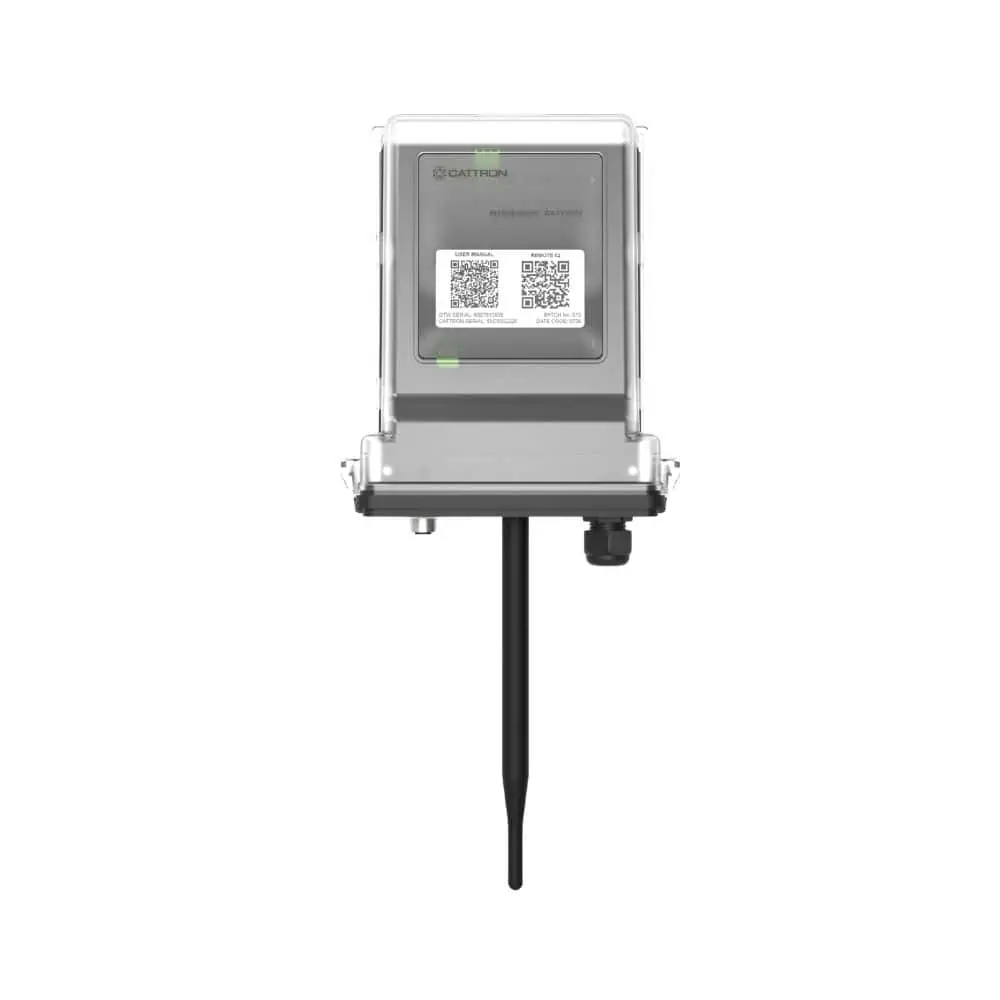
Until now, Cattron’s Messenger devices communicated with the RemoteIQ™ cloud platform primarily over cellular networks. That works well where coverage exists. But a sizable share of the equipment Cattron’s customers operate does not enjoy that luxury.
“The previous lineup of Messenger devices was all cellular-based communications to the RemoteIQ backend,” said Charles Christie, manager of Cattron Global’s IoT and RemoteIQ Cloud solutions. “We’ve had requests from customers to be able to use Wi-Fi or Ethernet connectivity to get data to our cloud, and a lot of that was driven by our oil, gas and mining customers that have equipment out in the middle of nowhere and outside of cellular coverage.”
What those remote sites often have is a satellite internet connection. Drilling sites, pipeline installations and remote pump stations frequently deploy satellite broadband to support communications, phones and other equipment. The Messenger Gateway lets operators leverage those existing uplinks rather than paying for separate cellular connectivity or, worse, going without visibility altogether.
The connectivity gap is not limited to the remote frontier. Christie noted a second, very different use case: standby generators in commercial and industrial settings such as hospitals and grocery stores. These facilities typically already have robust networks in place. For them, the appeal is avoiding the added expense of a cellular data plan when a perfectly good Ethernet drop is already in the wall, or a Wi-Fi hotspot is nearby. In both scenarios, the Gateway’s value is the same. It uses the customer’s existing infrastructure.
Remote Monitoring Reduces Site Visits and Operating Costs
The clearest return on remote telemetry is measured in trips not taken. Every visit to a distant site carries a cost in labor, fuel, vehicle wear and time. When the site is hours away, those costs compound quickly.
“You can do more with fewer people, and get faster response times,” Christie said. Remote monitoring lets operators see equipment status without dispatching a technician, and remote control lets them act on what they see. For many Cattron customers, the ability to start, stop and adjust equipment from a laptop or phone is as valuable as the monitoring itself.
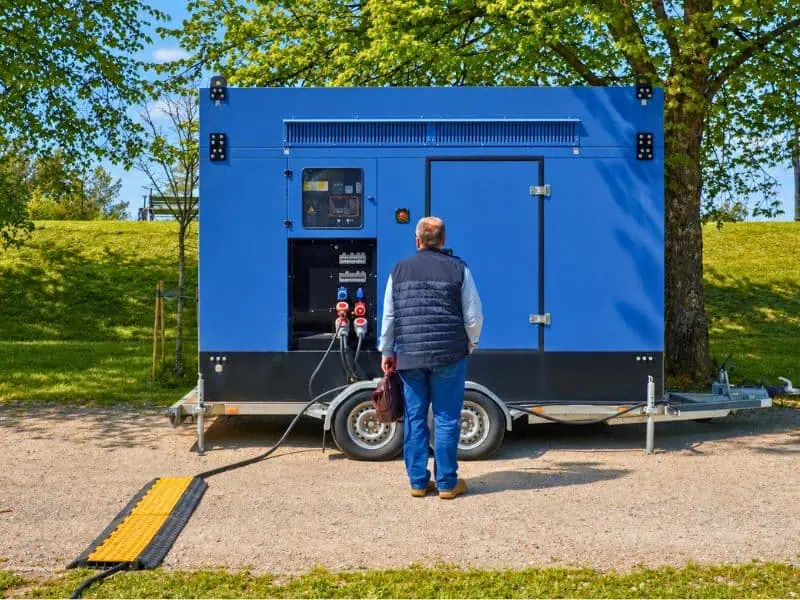
The benefit extends to how problems get solved. When an operator can see the specific fault code a controller is reporting, the entire service response changes. Rather than sending an expert on a long drive to diagnose a problem in person, a manager can identify the issue remotely, then guide a local technician who may not specialize in that equipment, ensuring the technician arrives with the right tools and parts.
“They know what they’re up against,” Christie said. “When you’re traveling a couple of hours to fix something, you want to make sure you take the right tools and parts with you.”
Increasingly, the goal is to catch trouble before it becomes a failure. Cattron is expanding its predictive analytics and predictive maintenance capabilities, giving operators the chance to address a developing issue while it is still small.
Real-Time Monitoring for Engines, Generators and Pumps
Once connected to a supported controller, the Messenger Gateway reads the full range of data the controller collects, including any sensor inputs wired to it. It then transmits that data over MQTT, a messaging protocol widely used in connected-device applications, across a secure, encrypted connection to the RemoteIQ cloud.
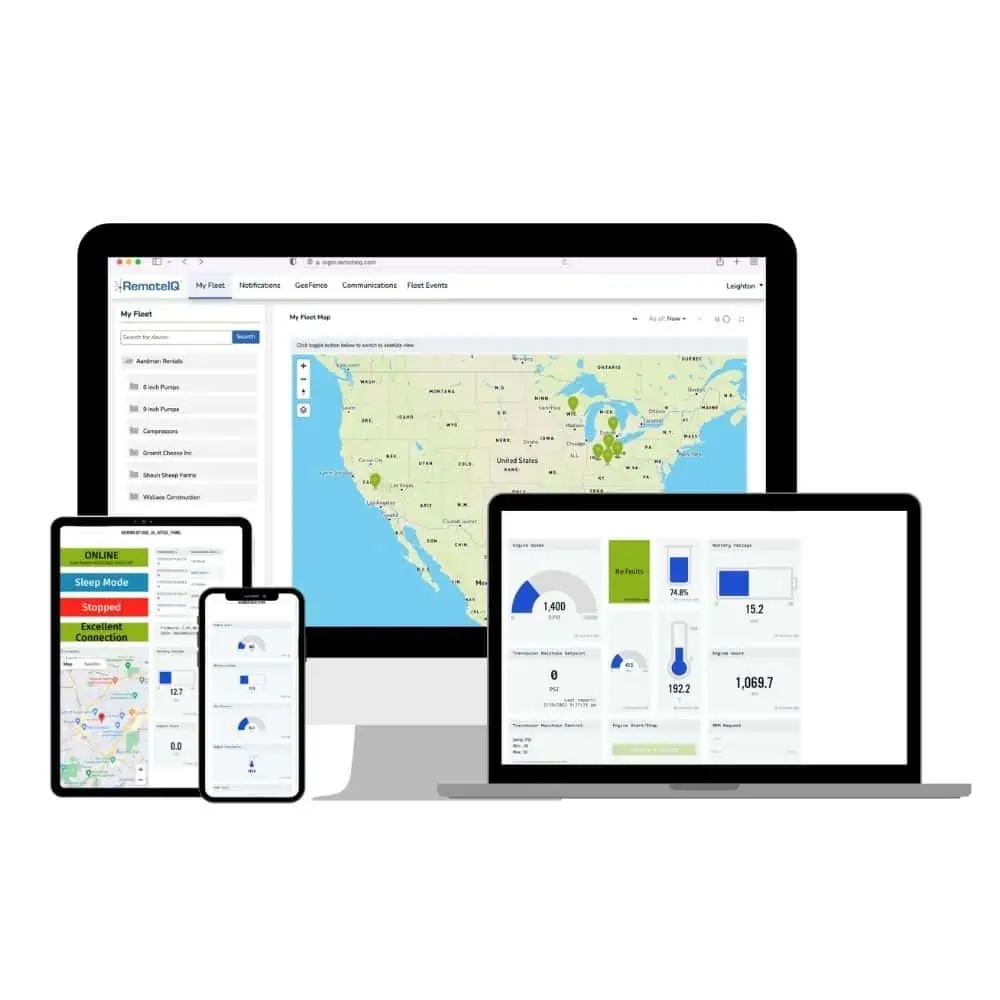
Gateway comes pre-configured to report the runtime parameters that matter most to engine, generator and pump operators, and Christie was specific about which ones customers watch most closely. Fuel level ranks near the top, particularly for portable pumps and generators, because it tells operators which units need a visit. Fault codes matter because they flag developing problems. Engine speed lets operators track run times and engine load, which in turn reveals how efficiently equipment is working. And for pumping applications, pressure and flow trends can signal real physical problems in a line, whether a break causing a pressure drop or a developing clog driving pressure up.
For customers pairing the Gateway with a CANplus™ pump control panel, more sophisticated diagnostics are possible. With the right sensors installed, the machine learning capability can even detect pump cavitation, a condition that damages equipment over time, before it does lasting harm.
Rugged, Plug-and-Play Telemetry for Remote Equipment
The equipment these units monitor operates in punishing conditions, and the Gateway is built accordingly. It is housed in a weatherproof NEMA 4X enclosure and rated for outdoor and harsh-environment installation across a wide operating temperature range. While the Gateway itself is new, it inherits a proven pedigree. Earlier Messenger devices have a long track record in exactly these environments, and Cattron designed the Gateway to meet the same requirements.
Commissioning is designed to be quick. Operators can connect the Gateway in two ways. Over Ethernet, there is essentially nothing to configure. The device uses DHCP, so any network that can assign it an IP address and reach the cloud will have it reporting with no setup. Over Wi-Fi, the process is nearly as simple. A technician connects a phone or laptop to the Gateway’s onboard Wi-Fi hotspot, searches for the site’s network, enters the password and is finished.
Connecting CANplus and DynaGen Controllers to the Cloud
For operators who already run Cattron controllers, adding Gateway connectivity is intended to be nearly effortless. The Messenger Gateway supports the CANplus CP1000 and CP750-E pump control panels along with the DynaGen™ PRO600, TG410 and TE410 engine controllers. With the correct wiring harness, setup is fast because the device arrives pre-configured to read every parameter from the controller, and by extension from the engine.
That design philosophy extends across the entire Messenger family. Because every Messenger device reports to the same RemoteIQ cloud in the same way, operators can mix and match devices across a fleet based on the connectivity available at each individual site. A cellular Messenger at one location and a Gateway at another appear identical to the end user once their data reaches the cloud. The only difference is how the data gets there.
Cloud-Based Remote Monitoring and Control with RemoteIQ
The Messenger Gateway requires a RemoteIQ subscription, and the platform is where the data becomes useful. Logging in, operators see all their devices in both list and map views. Drilling into any single unit reveals dashboards for engine parameters and connected sensors, complete with trend data over time. Operators can configure alarms and notifications for the conditions they care about, alerting field personnel by voice, text or email, and can download reports in several formats, or have them delivered by email on a regular schedule.
Remote control is a core capability for users with the right permissions assigned by account administrators. For a pump, that means starting and stopping the unit, adjusting speed to raise or lower flow and pressure, and triggering a remote emergency shutdown. For a generator, control is more straightforward, generally limited to start and stop, since the generator speed is fixed.
RemoteIQ offers tiered data plans, and Christie noted that most generator and pump customers choose the highest tier. Those operators typically want continuous diagnostic data they can trend, along with the ability to take remote control whenever needed. Lower tiers suit operators who only need exception-based alerting, where the system reports when something goes wrong rather than streaming data continuously.
Secure Industrial IoT Connectivity and Cloud Communication
With connected industrial equipment increasingly in the crosshairs of cyber threats, the Gateway was built with enterprise-grade protection, including WPA3 wireless encryption and encrypted cloud communication. The MQTT protocol carrying its data is itself a security asset, well-suited to connected-device applications in part because of how it secures the connection.
“Today, the whole security issue with IoT applications is front and center in everybody’s mind,” Christie said. It is a concern Cattron takes seriously across its connected-system portfolio, and one that reflects the company’s decades of experience developing its own hardened communications.
The Future of Remote Monitoring and Predictive Maintenance
Christie framed the Messenger Gateway as fundamentally about choice. Cattron’s customers run large, mixed equipment spanning different makes and models across scattered locations, and the company aims to remain agnostic, offering monitoring and control options that fit every asset. The logic is cumulative. The more equipment an operator connects, the more the whole operation can be optimized, a network effect that grows with each unit brought online.
That vision increasingly includes artificial intelligence. Cattron is actively folding advanced analytics into the RemoteIQ platform to deliver deeper insights for operational decision-making, with more capability on the way. For operators still driving hours to read a gauge in the middle of nowhere, the future of remote monitoring is arriving, and it no longer requires a cell signal to reach them.