
Leading the Way in Remote Control Technology
Cattron’s Spotlight in Compact Equipment Magazine
We are proud to be featured in the April 2025 issue of Compact Equipment Magazine. This special Q&A article, authored by Pam Kleineke from Benjamin Media, discusses the growing importance of remote control solutions across various industries. Chatting with Cattron’s Shane Samson, market lead for mobile equipment and John Keenan, applications, we cover everything from safety benefits to advanced control technologies and highlight how Cattron’s focus on remote control solutions is helping shape the future of mobile equipment operations.
Benefits of Remote Control For Mobile Equipment
Remote control technology delivers multiple advantages across diverse applications. The most immediate benefit is enhanced operator visibility — users gain a much wider field of view, which is particularly valuable for precise load positioning and operation in confined spaces. This improved perspective leads to greater operational efficiency, especially when working on inclines or in areas where machine tipping is a concern.
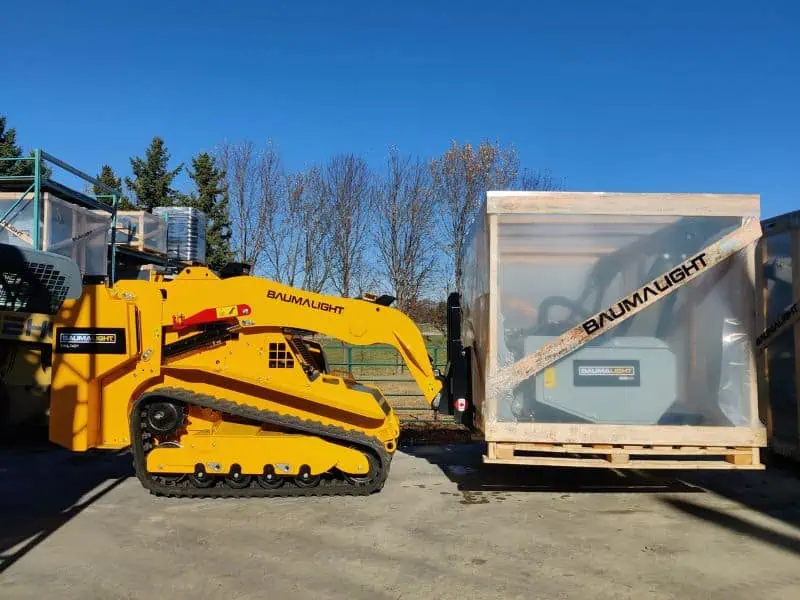
The technology also transforms single-operator efficiency. Operators can perform multiple tasks without repeatedly mounting and dismounting equipment.
For example, managing material loading while simultaneously controlling machine positioning. This capability is particularly valuable in applications like agricultural operations, where operators often need to handle tasks like opening gates while moving materials.
From a safety perspective, remote operation keeps personnel away from hazardous environments, whether handling dangerous materials or working in challenging conditions. The system includes comprehensive safety features, including emergency stop capabilities that can be activated from a safe distance.
Mobile Equipment Applications That Benefit From Remote Control
The technology excels across a broad spectrum of equipment and industries. Core applications include:
- Mini skid steers for material handling and site work
- Stump grinders for landscape operations
- Conveying equipment for material transfer
- Mobile buckets and material handling attachments
- Winches for pulling operations
- Chippers for vegetation management
- Portable tracked generators
- Compact concrete pumps
- Compact cranes
Primary users span multiple sectors, including:
- Construction companies require precise equipment control
- Waste management facilities handling hazardous materials
- Agricultural operations, both large and small
- Production facilities needing flexible material handling
- Warehouses managing complex logistics
- General contractors requiring versatile equipment solutions
- Machine operators working in challenging environments
Engine Control and Radio Remote Control Solutions From Cattron
Our technology combines radio remote control on the CattronControl™ LRC-S1 operator control unit with the DynaGen™ PRO600 engine controller to create an integrated equipment control solution. The LRC-S1 features dual multi-axis joysticks that support up to four motion controls as well as a sunlight-readable digital display that provides critical system information. Its IP65-rated housing is designed for demanding operating environments and the system offers an operational range of up to 5,000 feet.
The technology is compatible with a wide range of commercial engine makes and can integrate with electric-over-hydraulic controls. An innovative docking system allows operators to use the controller either from inside the cab or remotely, providing greater flexibility for different tasks and operating conditions. The system also supports digital monitoring of hydraulic functions and engine parameters, as well as data logging for maintenance tracking. White-label and private-label options allow equipment manufacturers to align the solution with their own branding.
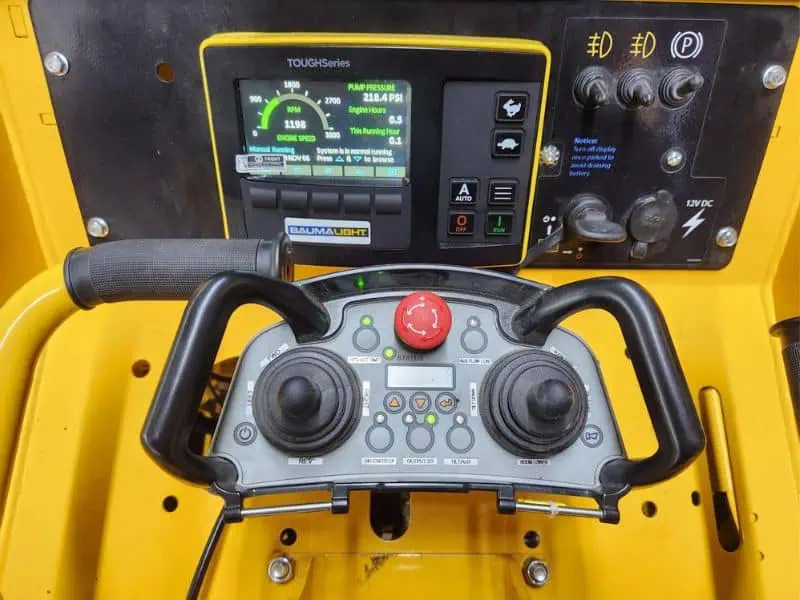
This integrated approach is particularly valuable for smaller equipment manufacturers because it provides sophisticated control capabilities without requiring extensive in-house development. Rather than treating remote operation as an add-on, Cattron brings engine control, machine management and remote operation together in one comprehensive system. This enables manufacturers to monitor engine and hydraulic performance, track preventive maintenance, optimize operating efficiency and provide emergency intervention capabilities. Optional cellular connectivity can extend monitoring beyond the immediate worksite.
Because the system is modular, manufacturers can introduce these features gradually as their equipment and customer requirements evolve. Cattron technology can also support hybrid systems that combine battery storage with a smaller engine responsible for charging and machine operation. For fully electric equipment, Cattron remote controls can provide the wireless operation required by the application.
Safety Tips for Operating Mobile Equipment with Remote Control
Safe remote operation begins with maintaining continuous visual contact with the equipment. Operators should position themselves where they have clear sight lines to the machine, its movements and any nearby hazards. A remote-controlled unit should never be operated beyond the operator’s visual range, even if the control system is technically capable of communicating across a greater distance.
Before operating the equipment, users should evaluate the ground conditions and the machine’s stability. Emergency stop functions should be tested regularly and the control unit should be kept protected, clean and properly maintained. Every operator must also receive appropriate training in routine operation and emergency procedures so they know how to respond if conditions change or a problem occurs.
When these practices are followed, remote control technology can help companies reduce personnel exposure to hazardous conditions while maintaining or improving productivity. The result is a safer working environment without sacrificing operational efficiency.
Market Growth for Integrated Remote Control on Mobile Equipment
The market for remote-controlled equipment is experiencing significant growth as companies place greater emphasis on operator safety and operational efficiency. Remote operation can help keep personnel away from hazardous conditions while enabling a single operator to perform tasks more effectively, making the technology increasingly attractive across a wide range of industries.
Labor shortages are also prompting companies to find ways to accomplish more with the personnel they have. At the same time, rising insurance expectations and stronger demand for dependable safety systems are increasing interest in technologies that help reduce operational risk.
Broader industry trends are supporting this growth as well. Equipment manufacturers and operators are adopting more automation technologies while seeking ways to improve fuel efficiency and reduce environmental impact. Together, these factors are making remote control an increasingly important part of modern equipment design and operation.