
Enhance Safety with a Wireless Crane Remote Control System
May 6, 2019
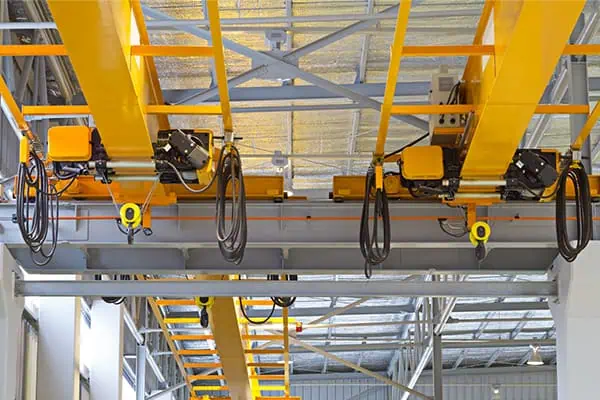
Cranes are invaluable to various industries, including construction, manufacturing, warehousing, steel production, grain, logging, ship loading, and rail yards. The reliance on cranes for loading, unloading, and moving heavy materials will remain for the foreseeable future. This necessitates continued focus on maintaining or improving operational safety and ensuring proper safety protocols are in place.
One safety measure now widely adopted is using a wireless crane remote control system to operate the crane rather than pendant or cab controls. While these systems achieve a variety of process and efficiency improvements, operator safety is a significant driver of their adoption. There are three primary ways crane remote control systems should be a part of every crane operator’s safety manual.
- Minimizing the risk of falling material or dropped loads.
- Reducing the element of human error.
- Identifying trip hazards and pinch points.
Wireless Crane Remote Control Reduces Risk of Falling Material or Dropped Loads
An elevated risk of accidents from falling materials exists unless the operator can be safely positioned away from the load. Additional risk factors include:
- Reduced line of sight to the load
- Trip/slip hazards
- Mechanical failure
- Operator competency
While using a crane remote control, the operator is no longer tethered to the pendant or the crane, allowing them to position themselves out of the danger zone, away from the hoist and its load.
Compared to the field of view when using a fixed pendant, the remote control offers greater visibility and an expanded line of sight to other operations and personnel on the ground. This enables operators to avoid or alert other work crew members to an impending hazard and prevent it from happening.
Reduce Human Error with a Wireless Remote Control System
One of the most critical factors in minimizing accidents is ensuring the crane equipment is operated by qualified workers. Having proper certification and training on the equipment dramatically improves the operator’s ability to prevent accidents.
Modern wireless remote controls are equipped with built-in safety features to supplement operators’ knowledge, adding another layer of protection to the safety plan. Examples of safety features in standard crane remote control systems include:
- Ergonomic design to prevent inadvertent operations.
- Easy to access and safe, machine stop switch.
- Prevention of unexpected motions by using push-to-operate buttons and bars or double-jog-enable features, blocking illogical combinations and applying interlocks and restrictions on certain function combinations.
- Haptic (vibration), LED, and LCD indications and feedback.
- RF and Infrared Close Start, RF Range limiting, and Infrared zoning.
- Key interlocks and supervisory functions.
Identify Trip Hazards and Pinch Points Using a Wireless Crane Remote
Crane remote control systems give crane operators additional mobility and improved line of sight. These two factors make it easier for operators to identify potential tripping hazards and pinch points. Operators can move at their own pace rather than the crane’s, since they are no longer tethered to it.
Thankfully, businesses and operators have adopted a wide variety of safety measures to keep crane operators safe and preserve the essential use of cranes in these industries. Using a crane remote control adds another layer of protection and will continue to be used by crane operators for many years.
Additionally, operators are no longer restricted by the pendant’s range of motion, which gives them the flexibility to position themselves at a better vantage point with improved line of sight, enabling them to plan their movements and reducing the likelihood of tripping/slipping and crush points during crane operations.
Find A Crane Remote Control System for You
Cattron manufactures a variety of industrial remote control systems for overhead cranes and lifting applications, including the Remtron PatriotPro, the Tyro 2×2 for small overhead cranes, hoists and jib cranes, the heavy-duty Classic Series and the feature-rich CattronControl product line. They come in handheld pushbutton and bellybox styles, offering a wireless experience that makes them easy to operate.
Evaluating a crane remote control solution does not have to be difficult. Cattron has over 80 years of experience in radio remote control. Talk with one of our experts to find the optimal crane remote control system for your application.